
Key Takeaways
- A successful local lead generation funnel does not need a large advertising budget; it needs a clear audience, focused offer, and measurable path to conversion.
- A strong lead generation landing page should give visitors one obvious next step instead of competing calls to action.
- Local businesses can combine search, local SEO, paid advertising, reviews, and follow-up to create a more reliable flow of prospects.
- Tracking qualified leads, appointments, and sales is more useful than measuring form submissions alone.
- Small businesses can improve results by testing one part of the funnel at a time instead of rebuilding everything at once.
A local business does not need thousands of website visitors to generate customers. It needs the right people to find the business, understand its offer, and have a simple reason to take the next step. That is the foundation of lead generation for small businesses, especially when marketing budgets are limited.
The challenge is that many businesses focus on attracting traffic without considering what happens afterward. Someone clicks an ad, visits a website, looks around, and leaves. A well-planned funnel connects those stages so that each interaction moves a potential customer closer to contacting the business.
Start With the Customer, Not the Funnel
Before choosing advertising, channels or building landing pages, define who you are trying to reach.
A local plumber, dental practice, law firm, and home remodeling company may all want more leads, but their customers search differently and have different reasons for making contact. Someone with an urgent plumbing problem may call immediately. A homeowner considering a remodeling project may spend weeks researching options.
That difference should influence the funnel.
Start by identifying:
- The service or product you want to promote
- The geographic area you serve
- The problem customers are trying to solve
- The action you want them to take
- What makes your business a credible choice
Google recommends mapping the customer journey from the initial interaction through the eventual sale and tracking the conversion stages along the way.
For local business lead generation, this simple exercise can prevent a common mistake: sending every visitor to the same generic homepage.
Build One Focused Offer
A funnel becomes harder to convert when visitors have too many choices.
Instead of asking someone to browse your entire website, give them a specific reason to respond. Depending on the business, that could be a consultation, estimate, appointment, inspection, quote, introductory offer, or service request.
The offer should answer three basic questions quickly:
- What do I get?
- Why should I care?
- What should I do next?
The goal is not to make the offer complicated. In fact, simpler is often better when the visitor is already searching with strong intent.
Create a Landing Page With One Job
A lead generation landing page should be built around one primary conversion action.
That does not mean the page needs to be bare. It can include service details, customer reviews, credentials, photographs, FAQs, service-area information, and other trust signals. The important point is that these elements should support primary action rather than distract them from it.
A useful structure might include:
- A clear headline addressing the customer’s need
- A concise explanation of the service
- Benefits or reasons to choose the business
- Reviews, credentials, or other trust signals
- A simple form or prominent contact option
- A clear call to action
Google’s guidance similarly emphasizes relevant landing pages, clear conversion goals, and a user-friendly experience.
Turn More Local Traffic Into Qualified Leads
A high-converting funnel starts with the right strategy, landing page, and call to action. CRM Digital Inc. can help you build a conversion-focused digital marketing strategy designed to attract local customers and turn more visitors into qualified leads.
Ready to improve your local lead generation? Schedule a Free Consultation with CRM Digital Inc.
Keep the Budget Focused
A small marketing budget can disappear quickly when it is spread across too many channels.
A better approach is to start where customer intent is strongest. For many local businesses, that may mean focusing on local search visibility and one paid acquisition channel rather than trying to maintain campaigns across every social platform.
Organic local SEO can support this strategy by helping a business appear when nearby customers search for relevant services. Google specifically identifies local SEO, Google Ads, and Local Services Ads as potential approaches for how to generate leads for local businesses.
The right mix will vary by industry, competition, location, and customer behavior.
Turn Traffic Into Trust
Getting someone to the landing page is only half the job.
Local customers often want reassurance before handing over their contact information. Reviews, testimonials, recognizable credentials, service-area details, photographs, guarantees where appropriate, and clear business information can reduce uncertainty.
This is particularly important for high-consideration services. A visitor may compare several local businesses before deciding whom to contact.
Trust should therefore appear throughout the funnel, not only at the bottom of the page.
Follow-Up Is Part of the Funnel
Generating a lead does not automatically generate a customer.
A prospect may submit a form while comparing providers, missing a phone call, or need time before deciding. Without a follow-up process, a business can spend money generating leads and then lose opportunities after initial contact.
A practical follow-up system might include:
- A confirmation message after form submission
- A prompt response to phone or form inquiries
- Appointment reminders
- Useful information related to the requested service
- Follow-up messages for prospects who have not responded
This is where a lead generation sales funnel becomes more than a website page. The funnel continues through communication, qualification, appointment setting, and eventually the sale.
Measure Leads, Not Just Clicks
A campaign that produces 100 inquiries is not necessarily better than one that produces 30.
What matters is what happens after those inquiries arrive.
Track metrics such as:
- Cost per lead
- Qualified lead rate
- Appointment rate
- Lead-to-customer conversion rate
- Cost per acquired customer
- Revenue generated from leads
Google recommends defining and measuring conversions that matter to your business, such as generating leads or completing purchases. (Source)
For small business leads, this distinction is especially important because a handful of high-value customers can matter more than a large volume of low-quality inquiries.
Build a Smarter Local Lead Generation Strategy
Stop guessing which marketing efforts are generating results. CRM Digital Inc. combines SEO, PPC, local SEO, conversion optimization, and analytics to help businesses attract the right audience and generate measurable leads.
Ready to grow your business with a data-driven strategy? Get Your Free Quote from CRM Digital Inc.
Build a Funnel That Can Grow With You
An effective local funnel does not have to begin with expensive software, a large advertising budget, or dozens of campaigns. It needs a specific audience, relevant offer, focused landing page, credible proof, responsive follow-up, and reliable measurement.
As the business generates more data, those elements can be refined. Pages can be tested, campaigns adjusted, audiences narrowed, and follow-up improved based on actual customer behavior.
For businesses that need additional expertise, CRM Digital Inc. can help develop strategies around websites, digital marketing, search visibility, and conversion-focused campaigns. The objective should always be the same: building a system that attracts relevant prospects and gives them a clear path toward becoming customers.
FAQs About Local Lead Generation
Q. What is the average conversion rate for a funnel?
There is no single conversion rate that applies to every funnel. Results vary significantly by industry, traffic source, offer, audience, landing page, and conversion action. It is more useful to establish a baseline for your own funnel and improve it over time.
Q. Is lead generation business profitable?
It can be profitable when the cost of acquiring leads is lower than the revenue those leads ultimately generate. Profitability depends on factors such as lead quality, customer value, acquisition costs, operating expenses, and the business’s ability to convert leads into paying customers.
Q. Is funnel marketing outdated?
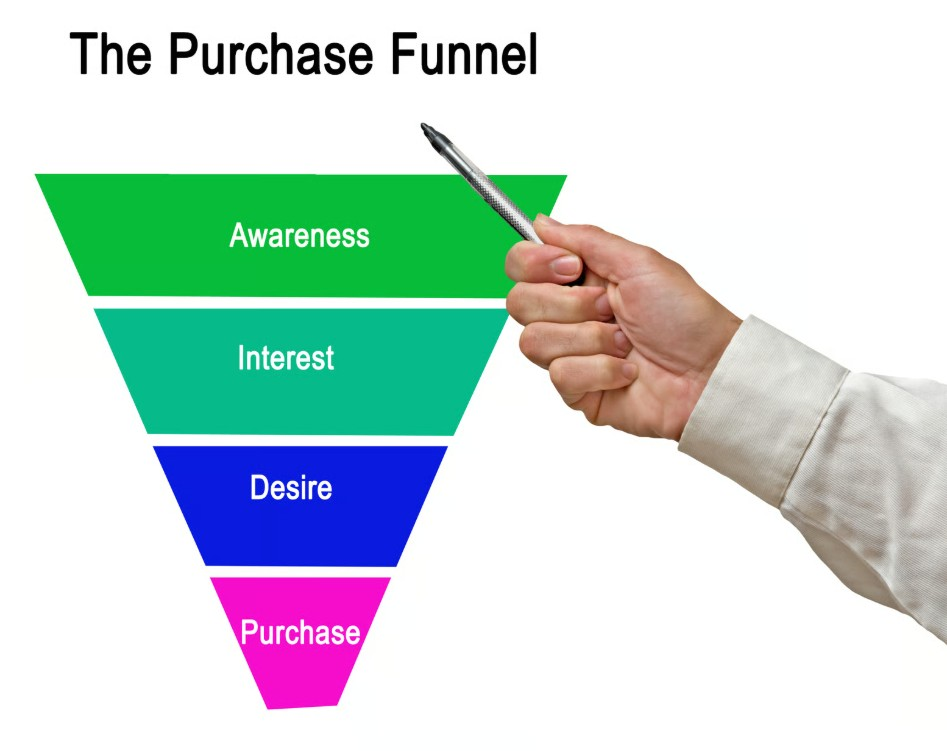
No. The traditional funnel may be too simplistic for modern customer behavior, but the underlying idea of guiding prospects from awareness toward action remains useful. Today’s funnels are often better understood as connected customer journeys with multiple touchpoints.
Q. How can a small business generate leads without a large budget?
Begin with a specific service, defined local target audience, optimized landing page, local SEO, and good follow-up efforts. Investing in channels where real customer intentions are found is more effective than sharing a limited budget across numerous platforms.
Q. What is the typical lead conversion rate for lead generation?
There is no universal benchmark because conversion rates differ by industry, offer, traffic source, and the definition of a conversion. A form submission, qualified lead, booked appointment, and paying customer are different stages and should be measured separately.