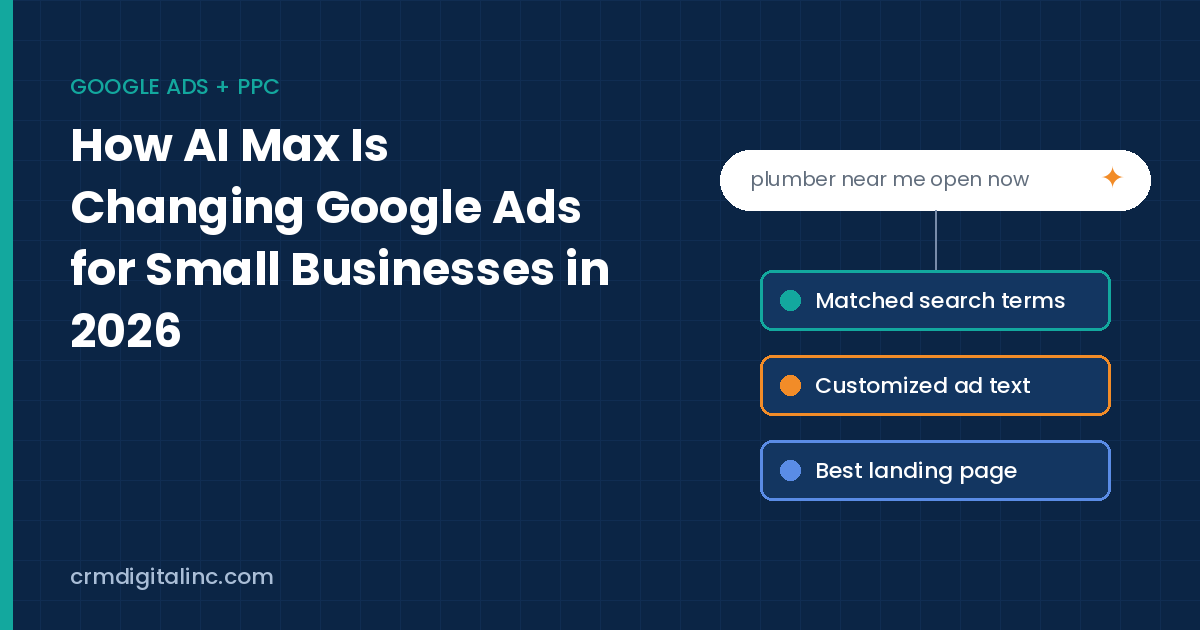
Google Ads has steadily moved toward automation, and AI Max is bringing that shift directly into Search campaigns. Instead of relying only on keywords, ad messaging, and landing pages selected during setup, advertisers can give Google more flexibility in determining when an ad is relevant and how it responds to a search.
For small businesses in 2026, that can create opportunities to reach searches they may have missed. It also means giving Google more influence over how ads are matched, adapted, and connected with landing pages, making campaign setup and oversight increasingly important.
Search Campaigns Can Reach Beyond Existing Keywords
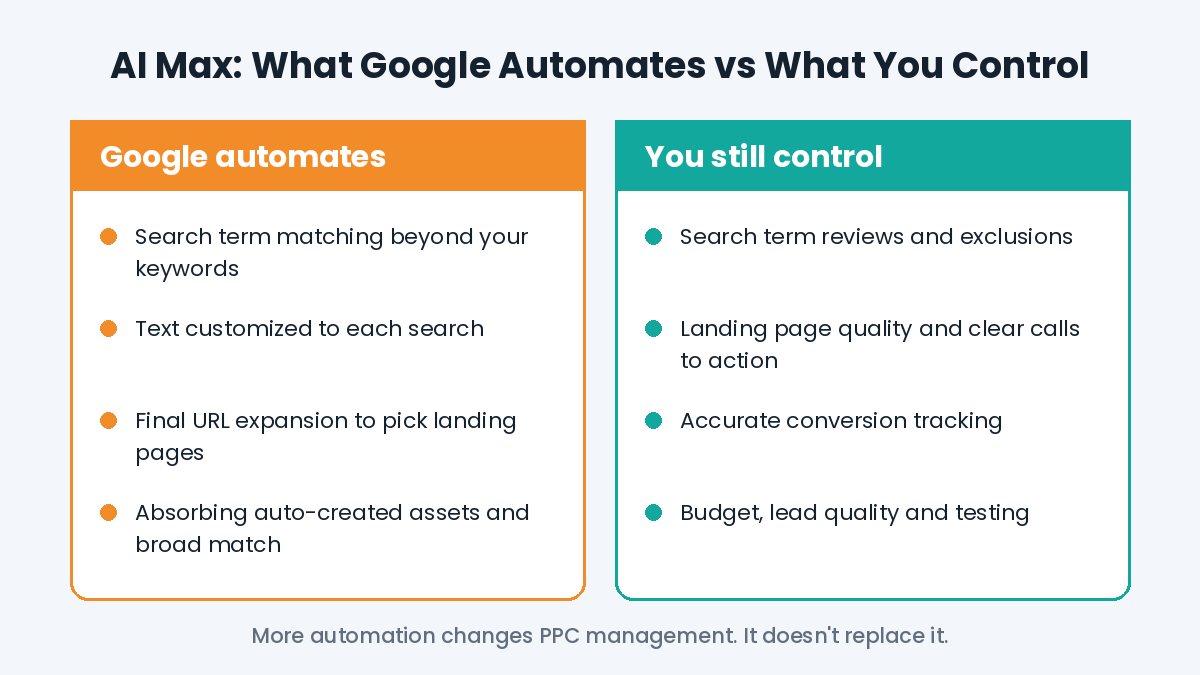
One of the biggest changes with AI Max is search term matching. Google can use existing keywords, ads, and landing-page content to identify additional relevant searches, helping campaigns reach queries that may not be covered by a manually built keyword list.
Broader reach, however, does not automatically mean better performance. Small businesses still need to review the searches attracting traffic, use exclusions where needed, and determine whether that added reach is producing qualified leads or sales. With a limited ad budget, extra clicks only matter when they have a realistic chance of contributing to business results.
Ad Messaging and Landing Pages Become More Flexible
AI Max can customize text assets around a user’s search and use final URL expansion to select a relevant page from the advertiser’s website. This gives Google more flexibility to connect each search with an appropriate message and destination.
That makes website quality increasingly important. Clear service pages, accurate information, focused calls to action, and logical site structure give the system stronger material to work with. If landing pages do not match customer intent or make the next step clear, more automation will not fix the underlying conversion problem.
Legacy Search Features Are Moving Toward AI Max
AI Max is becoming more relevant in 2026 as Google moves some existing Search campaign features into it. Automatically created assets and campaign-level broad match are scheduled to transition beginning in September 2026. Google has also announced plans to move Dynamic Search Ads toward AI Max, with that transition now expected to begin in 2027.
Businesses using these features should review campaign settings, exclusions, landing pages, and conversion actions before the transition. This can make it easier to understand what Google is automating and where closer advertiser control may still be needed.
AI Max Changes the Work, Not the Need for PPC Strategy
More automation changes campaign management rather than eliminating it. Accurate conversion tracking gives Google clearer information about which clicks are leading to valuable actions, while regular reviews help determine whether expanded reach is actually contributing to business results. AI Max experiments can also help advertisers test its impact before applying changes more broadly.
At CRM Digital Inc., we manage Google Ads around measurable business goals, from targeting and conversion tracking to landing-page performance, testing, and ongoing optimization. Contact us to build a PPC strategy that uses AI Max where it adds value while keeping your budget, lead quality, and campaign goals in focus.
Frequently Asked Questions
What is AI Max in Google Ads?
AI Max brings more automation into Google Ads Search campaigns. It can use your existing keywords, ads, and landing-page content to match additional relevant searches, customize text assets around a user’s search, and use final URL expansion to select a relevant landing page from your website.
Is AI Max a good fit for small businesses with limited ad budgets?
It can be, but broader reach does not automatically mean better results. Small businesses should review the search terms driving traffic, use exclusions where needed, and confirm that expanded reach is producing qualified leads. AI Max experiments can help test its impact before applying it more broadly.
What should advertisers review as legacy features move into AI Max?
Review campaign settings, exclusions, landing pages, and conversion actions. Automatically created assets and campaign-level broad match are transitioning to AI Max beginning in September 2026, and Dynamic Search Ads are expected to begin moving in 2027. A review helps clarify what Google automates and where you still need control.